The exhibition also features recent works by Hannah Martin, Wenju Tseng, Martina Kocianova, Veronika Fabian, Jiayang He, and Roei Palant. The curatorial approach emphasizes how surrealist jewelry continues to evolve, blending modern techniques with dreamlike concepts and unexpected forms.
Dialogue Between Generations of Artists
The selection deliberately contrasts classic pieces with contemporary proposals. Works by Man Ray, who explored gears and everyday objects, find parallels in the creations of emerging designers experimenting with 3D printing and recycled metals.
For the gallery, this interplay demonstrates that surrealism still inspires new visual languages and materials.
Beyond its historical perspective, the exhibition also highlights jewelry as an autonomous art form. Outlets such as BBC Culture point out that, since the mid-20th century, jewelry designed by visual artists has gained recognition comparable to that of sculptures and paintings, expanding the collector’s market.
The exhibition runs at the Louisa Guinness Gallery in Mayfair until the end of November. Visiting hours and ticket details are available on the gallery’s official website.
Impact on the Art Market
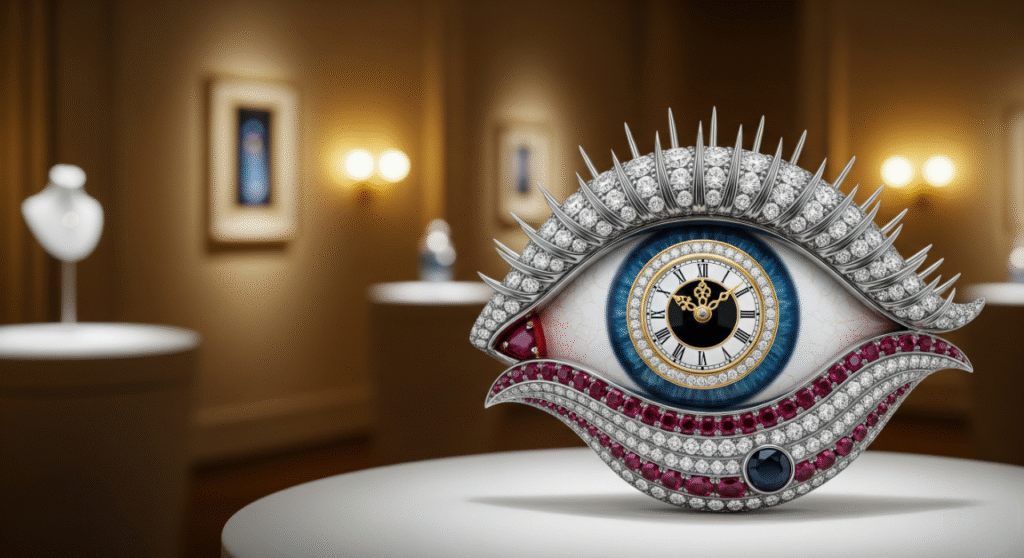
With pieces of high historical and artistic value, “Surrealist Jewels 101” is expected to attract collectors and experts worldwide. Dalí’s brooch, for instance, is considered one of the artist’s jewelry icons and rarely appears in public exhibitions. Works of this magnitude often influence market trends and boost demand for artistic jewelry.
For visitors, seeing precious materials crafted in unconventional ways reinforces the experimental essence of surrealism. For contemporary designers, engaging in dialogue with surrealist masters provides inspiration for new creative explorations.
Initiatives combining art and design are also gaining traction, attracting audiences interested in innovative creative processes. To explore more trends influencing lifestyle, visit : Style Trends
Style Trends section


