Challenges and Criticisms
Despite the numerous benefits of Beauty AI, it is not without its criticisms. Privacy concerns are at the forefront, as these technologies rely heavily on collecting personal data, including images and skin profiles. This raises questions about data security and user consent. There is also the issue of algorithmic bias, where AI systems might perpetuate existing stereotypes or exclude diverse skin types from analysis. As technology influences beauty standards, there’s a risk of a homogenized definition of beauty, which may not reflect cultural or personal diversity.
“Technology can change every aspect of our lives, but when it comes to beauty, it’s essential that we retain the humanity and personal connection that make it truly meaningful.”
The Ethical Dilemma
The ethical considerations surrounding Beauty AI are vast and complex. On one hand, AI promises greater inclusion by considering diverse datasets that encompass various skin tones and types. On the other, there is the potential for misuse, where AI reinforces narrow beauty ideals or is used for manipulative marketing practices. These ethical challenges require careful navigation and regulatory oversight to ensure the technology serves the interest of all consumers fairly.
Companies must be transparent about their data collection methods and ensure consumers are informed about how their information is used. Moreover, the development of AI models should involve diverse perspectives to minimize the risk of bias. Collaboration between technology developers, ethicists, and beauty industry stakeholders is crucial to address these ethical concerns effectively.
Consumer Adaptation to Beauty AI
Acceptance of Beauty AI by consumers is a gradual process, influenced by user experience, perceived benefits, and trust in technology. For many, the convenience and personalization offered by AI-powered beauty solutions are appealing, while others may approach these innovations with skepticism. Education plays a key role in helping consumers understand the advantages and limitations of Beauty AI. As awareness grows, consumers are likely to become more discerning in their adoption of AI technologies in their beauty routines.
The generational divide also influences adaptation rates, with millennials and Gen Z more inclined to experiment with new technologies compared to older generations. As these younger consumers become the dominant market force, the integration of Beauty AI seems poised to accelerate.
Role of AI in Men’s Beauty
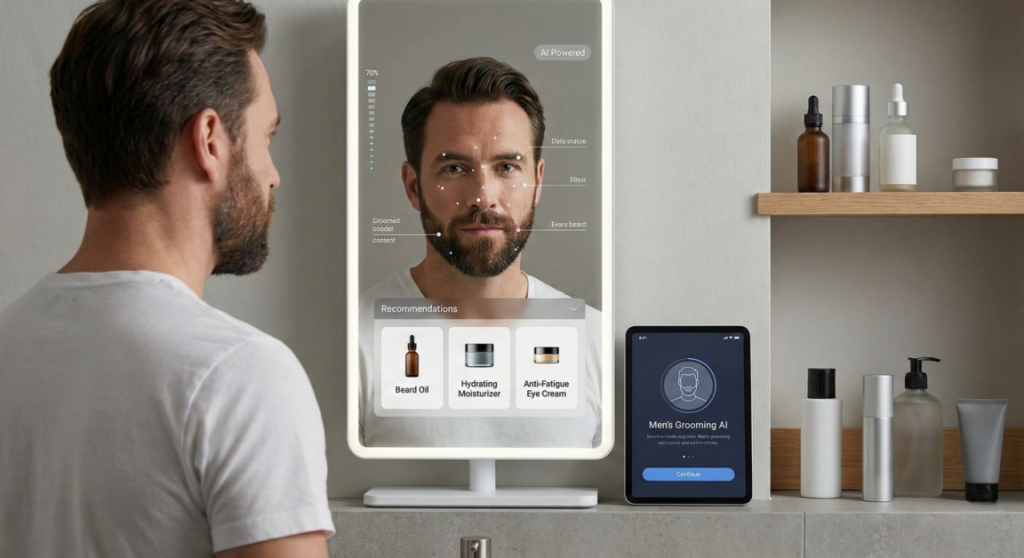
Role of AI in Men’s Beauty
The traditional gender roles in beauty are also evolving, with men increasingly embracing grooming and personal care. Beauty AI offers tailored solutions for men’s skincare and grooming needs, further dismantling the stigma around men’s beauty. AI technologies can provide men with personalized advice and products, catering to specific concerns such as beard care, anti-aging, and skincare regimens. This inclusivity signals a broader industry shift towards acknowledging diverse consumer needs and preferences.
The ability to provide customized solutions helps break down traditional barriers in the beauty market, ensuring all consumers, regardless of gender, have access to products that enhance their personal style and care.
Beauty AI and Sustainability
As sustainability becomes a priority, Beauty AI presents opportunities for reducing environmental impact. AI-driven technologies can optimize supply chains, minimize waste, and promote the use of sustainable materials. Through predictive analytics, brands can forecast demand more accurately, thus reducing the overproduction of beauty products that often end up as waste. Sustainability efforts are critical in an industry that heavily relies on packaging and product proliferation.
The growing consumer demand for environmentally-friendly products aligns with these technological advancements, allowing brands to distinguish themselves through sustainable practices and AI innovation. Consequently, sustainability and technology are merging to redefine the future of the beauty industry in an eco-conscious world.
FAQ – Common Questions
What is Beauty AI?
Beauty AI refers to the application of artificial intelligence technologies in the beauty industry, offering solutions like personalized product recommendations, virtual try-ons, and trend analysis.
How does Beauty AI personalize skincare recommendations?
AI uses data from user input, such as skin type and preferences, combined with algorithms to recommend products tailored to an individual’s skincare needs.
Are there privacy concerns with using Beauty AI?
Yes, there are concerns regarding data collection and security, as these applications often require personal information, such as images and skin profiles, to function effectively.
Can AI help eliminate beauty industry biases?
AI has the potential to address biases by using diverse datasets and inclusive algorithms; however, it can also perpetuate biases if not carefully managed and monitored.
Is Beauty AI relevant for men’s skincare and grooming?
Absolutely. Beauty AI is increasingly being used to address men’s specific skincare and grooming needs, offering personalized recommendations and breaking down traditional barriers in the beauty market.
👉 Beauty AI is revolutionizing the beauty industry by enhancing personalization, inclusivity, and sustainability. While it offers numerous benefits, the integration of technology must be carefully managed to address privacy concerns, ethical dilemmas, and inclusivity. As consumers become more informed and engaged, Beauty AI is set to redefine our beauty standards and practices. Embracing these technological advancements while retaining the essence of individuality and diversity will be key to shaping the future of beauty.


