Aquamarine vs. Blue Topaz: Knowing the Difference
A common question for those looking into aquamarine jewelry is how it differs from Blue Topaz. While they may look similar to the naked eye, they are entirely different minerals.
Rarity: Aquamarine is a variety of beryl (like emerald) and is significantly rarer and more valuable than topaz.
Color Source: Aquamarine’s color is almost always natural, whereas most blue topaz on the market is treated with radiation to achieve its hue.
Refraction: Aquamarine has a softer, more “watery” brilliance, while topaz tends to have a sharper, more vitreous sparkle.
Understanding these nuances is vital if you are looking at your purchase as a long-term investment.
Significance and Symbolism of Aquamarine
Often referred to as the “treasure of mermaids,” aquamarine carries a wealth of symbolism. In various cultures, it represents hope, youth, and health, believed to shield its wearer against darkness. Beyond its calming hue, this gemstone is said to inspire truth and trust, fostering a sense of calm and peacefulness.
“Aquamarine harmonizes not only the environments it touches, but also the hearts that behold it.”
It’s no surprise that aquamarine is a popular choice for engagement rings and anniversary gifts. It symbolizes a harmonious union and emphasizes a relationship grounded in trust and love. This rich tapestry of meaning adds an emotional dimension to its physical beauty.
Famed Aquamarine Jewelry Pieces in History
Aquamarine has graced numerous notable pieces throughout history. Most famously, the Brazilian government gifted an aquamarine tiara to Queen Elizabeth II for her coronation, which became a central piece in her collection.
Another historic masterpiece is the Dom Pedro Aquamarine, the world’s largest single piece of cut aquamarine. Currently housed in the Smithsonian, this obelisk-shaped gem stands as a testament to the grandeur and captivating spirit of the Brazilian mines.
Styling Aquamarine in 2026: The “Quiet Luxury” Essential
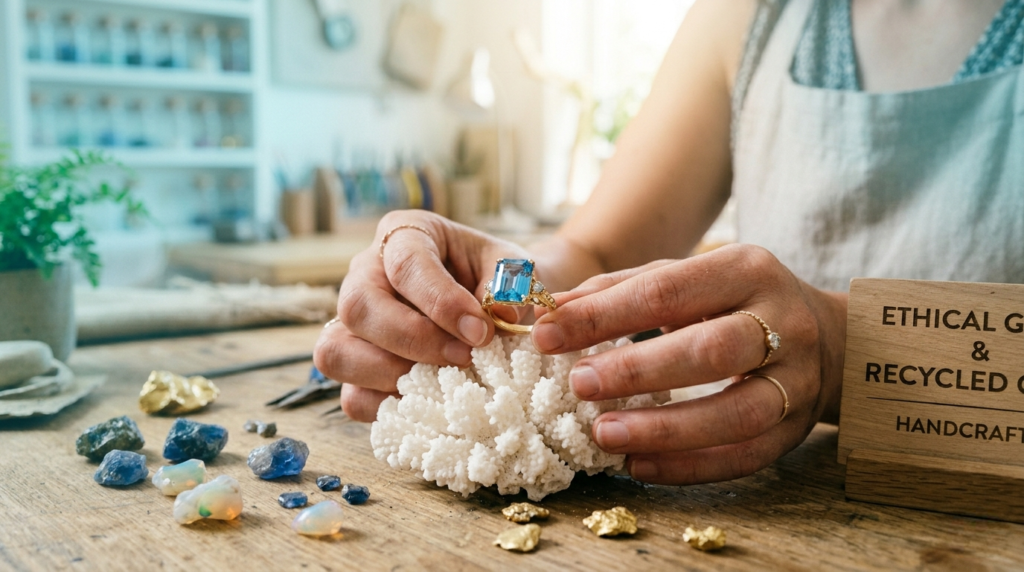
In contemporary fashion, aquamarine jewelry has become a staple of the “Quiet Luxury” movement. Its delicate shades of blue harmonize beautifully with all metal types, but the setting choice can completely change its vibe.
18k Yellow Gold: Creates a stunning contrast, giving the stone a vintage, regal feel.
White Gold or Platinum: Enhances the “icy” nature of the stone for a modern, minimalist look.
Rose Gold: Offers a soft, romantic aesthetic that is perfect for spring weddings.
Whether you are wearing a simple emerald-cut ring or a statement necklace, understanding your metals is key to durability. Before you choose your setting, check our guide on 14k vs. 18k Gold: The Secret Difference You Need to Know to find the perfect match for your aquamarine pieces.
Sustainability and Ethical Sourcing
With growing awareness about ethical jewelry, aquamarine stands out as a conscientious option. Most of the world’s high-quality aquamarine is sourced from family-owned mines in Minas Gerais, Brazil. These operations often have a lower environmental impact compared to large-scale industrial diamond mining. By choosing traceable aquamarine, you are supporting responsible mining practices that positively impact local artisan communities.
Caring for Your Investment
To keep your aquamarine jewelry shining like the Caribbean sea, follow these professional maintenance steps:
Cleaning: Use lukewarm soapy water and a soft-bristled brush.
Avoid Heat: While durable, prolonged exposure to intense heat can sometimes cause the color to fade.
Storage: Store it in a separate fabric-lined box. Because aquamarine is an 8 on the Mohs scale, it can scratch softer stones like opals but can be scratched by diamonds.
FAQ – Common Questions
Is aquamarine durable for everyday wear? Yes, it is quite hard (7.5–8), making it suitable for daily rings and bracelets.
What is the best cut for aquamarine? The “Emerald Cut” is the most popular, as it showcases the stone’s high clarity and watery depth.
Does it have spiritual benefits? Many believe it helps with clear communication and reduces anxiety during travel.
Conclusion
Aquamarine remains more than just a gemstone; it’s a statement of elegance, peace, and sustainability. Its timeless beauty and the depth of its blue hues continue to enchant anyone who gazes upon it. As we move through 2026, the demand for this “gem of the sea” only continues to rise. Whether as a birthday gift or a personal treat, aquamarine embodies a rich history and a brilliant future, making it a truly exceptional choice for jewelry lovers around the world.