Materials and Techniques
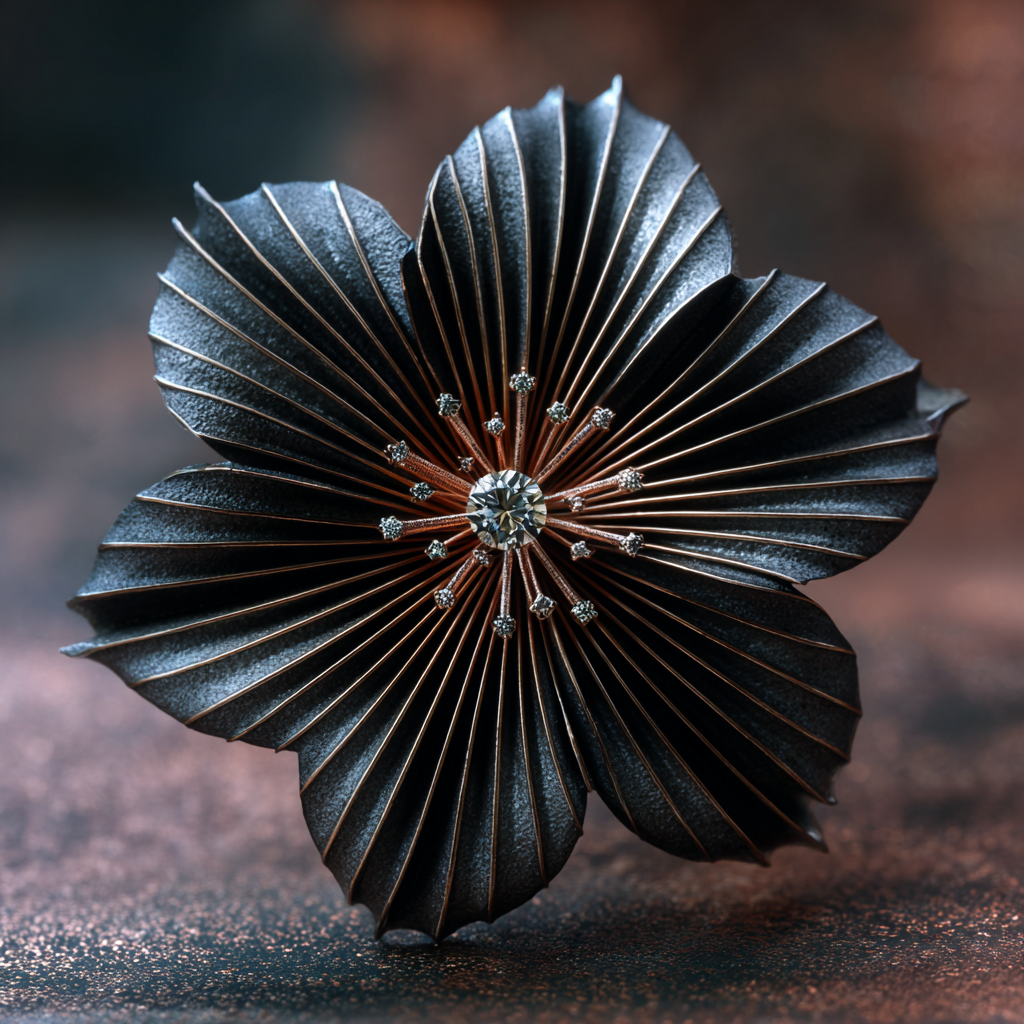
The earrings weigh 16 grams each and measure approximately 35 millimeters in diameter. A central cluster of old-cut diamonds is mounted in rose-gold settings, surrounded by a halo of zirconium paper panels framed in blackened silver. The composite construction reduces overall weight, allowing for larger volume without compromising wearability. The brooch, measuring 55 millimeters across, follows a similar architecture but integrates a double-pin mechanism for secure placement on fabric or lapels.
Blackened silver, achieved through controlled oxidation, provides a matte backdrop that accentuates the luster of both the diamonds and the polished rose-gold prongs. Zirconium paper—produced by compressing powdered zirconium into thin, flexible sheets—offers high tensile strength, enabling intricate cutwork that would be difficult to replicate in traditional metals. The use of old-cut diamonds aligns with Langella’s practice of repurposing heritage stones to limit the environmental impact of new mining activity.
The use of 18-karat rose gold provides a warm contrast to the blackened silver. If you are curious about why top designers prefer this purity for high-jewelry masterpieces, discover the technical reasons in our guide on 14k vs. 18k Gold: The Secret Difference.
Positioning at the Fair
VKD Jewels, a gallery known for curating limited-edition and one-of-a-kind pieces, selected LANGI Roma for its blend of historical reference and contemporary execution. The gallery’s stand at TEFAF features the water-lily set in a dedicated display case accompanied by magnified photographs of the Victoria amazonica leaf structure. Informational panels outline the botanical features that informed each design element, allowing visitors to connect the scientific basis with the finished jewels.
TEFAF Maastricht traditionally attracts collectors seeking museum-grade works, and the inclusion of Langella’s set places it in a market segment oriented toward connoisseurs rather than mass production. According to VKD, the earrings and brooch are available solely as a pair, reinforcing their status as a cohesive collector’s item. The gallery has not disclosed pricing but confirms that both pieces are certified unique and will not be reproduced.
Designer Background
Alessandro Langella founded LANGI Roma in 2018, drawing on experience in antique jewelry restoration to inform his design language. His studio, located in the historic center of Rome, frequently integrates reclaimed gemstones and experimental alloys. Previous collections have explored motifs such as Roman architectural fragments and Mediterranean marine life, but the Victoria amazonica project marks his first foray into direct botanical replication.
Langella states that the decision to work with zirconium paper emerged from the search for a medium capable of replicating the water lily’s delicate yet resilient tissue. The combination of antique diamonds and contemporary materials, he notes, is intended to bridge past and present, echoing the plant’s ancient lineage while positioning the jewelry firmly within modern design discourse.
Market Context
While nature-inspired jewelry is a long-standing genre, the application of biomimicry principles has become more pronounced in the high-end segment over the past decade. The use of scientific analysis to guide form and material choices aligns with broader trends in sustainable and responsible luxury. By emphasizing recycled diamonds and lightweight, low-impact materials such as zirconium paper, LANGI Roma positions its work within this movement.
TEFAF’s platform amplifies that positioning by providing access to an audience versed in both art historical value and contemporary innovation. Collectors attending the fair typically evaluate jewelry not only on aesthetic grounds but also on provenance, material sourcing, and conceptual depth. Langella’s water-lily set, grounded in identifiable botany and executed with traceable heritage stones, meets those criteria.
Langella’s focus on recycled diamonds and low-impact materials mirrors a broader shift in the industry. This commitment to ‘conscious luxury’ is a major theme this year, as seen in our latest report on Top Jewelry Trends 2026, where sustainability meets high fashion
Outlook
The earrings and brooch will remain on view for the duration of the fair. VKD representatives indicate that discussions with several private collectors are underway, and any acquisition will include comprehensive documentation of materials, design sketches, and fabrication processes. Should the set remain unsold by the fair’s close, it will return to LANGI Roma’s Rome atelier, where it may tour additional exhibitions later in the year.
For now, TEFAF visitors can observe how a South American aquatic plant, documented by botanists in the 19th century, continues to influence contemporary creative disciplines. Through the synthesis of blackened silver, rose gold, and antique diamonds, Langella demonstrates that the structural ingenuity of nature remains a fertile source of ideas for high jewelry.


